

Victorian homes are still very common across the UK, with examples of architecture from this period visible in nearly every direction in our home city of Bristol. Collectively, the term refers to houses that were built between 1837 and 1901, during the reign of Queen Victoria. During her reign, major social changes were taking place, along with significant growth in the population.
This expansion saw increased demand for housing, prompting a campaign to build enough new housing to accommodate these additional people. 4.28 million new houses had been completed between 1856, which is as far back as surviving housebuilding records extend, and the end of the Victorian era, although the true number for the whole of Victoria’s reign is likely to be significantly higher because there are no surviving records for constructions between 1837 and 1856.
The styles of house associated with the Victorian era are a well-documented part of British architectural history. While there were significant changes between the 1830s and the 1900s, with the use of stone becoming much less common and the use of brick becoming predominant by the latter part of Queen Victoria’s reign, what Victorian homes tend to have in common is that they are well-made, functional properties and built to last.
As the UK population continued to grow, the housing construction boom continued through the early 20thcentury, peaking in the 1930s, by which time a different style of architecture had become normal, but homes from the first two decades of the twentieth century, often known as Edwardian and post-Edwardian, tend to exhibit a continuation of the brick terraced and brick-built semi-detached styles that became popular during the late Victorian era.
A look at the housing stock of today will show you the sheer number of properties that are over 100 years old and still standing. According to the Valuation Office Agency, one in seven homes in England (15%) and a fifth of homes in Wales (23%) were built before 1900, with a further 5.3% of homes in England and Wales having been built between 1900 and 1918.
In the Victorian era, speed of building and function took priority over energy efficiency. Heating was generally accomplished by means of open fires serving the most lived-in rooms, with outlying rooms being allowed to stay relatively cold, but the abundant supply of coal and wood made comfortable levels of heating by open fire relatively affordable. These houses were not built with energy efficiency or sustainability in mind, and nor did the individuals building the properties have access to the materials or technology that would have made these considerations possible.
As of May 2024, the popular house-hunting portal Rightmove, which lists houses on the market via numerous different estate agents together in an easily searchable manner, revealed that Victorian houses collectively still win out in the popularity stakes as the most searched-for style of property on their site.
Those looking for Victorian houses typically value the conservation of their original internal design features as far as possible. With this realisation in mind, it would be wise to consider how any updates or changes made to improve the energy efficiency of your Victorian home could be made without compromising on such sought-after design characteristics and traditional features.
Below, we outline some areas where updates could be made to improve the energy efficiency of your Victorian property.
Heat loss
Although well built, Victorian properties were built with a view to serving the needs of their time. Open fireplaces, large bay windows, high ceilings and pitched rooves were some of the features that were favoured in this era. Since the introduction of modern central heating systems, most surviving examples no longer have functional open fireplaces and instead have gas boilers and radiators.
Given the high cost of central heating powered by either fossil fuels or electricity nowadays, and in the light of the major advances in energy-efficient building insulation techniques that have become standardised over the past fifty years or so, there is a strong case for adapting some traditional features of Victorian homes to improve their energy efficiency performance and ratings.
A good EPC rating is usually now a regulatory requirement for properties that are rented out to others, and even for owner-occupied properties, it is a distinct advantage when it comes to the time to sell your house.
Draughtproofing
Installing draught excluders on doors, sealing wooden floorboards and implementing draught-proofing strips in areas needed will help to keep draughts of cold air at bay. These non-invasive techniques can have a surprisingly big effect in reducing heat loss in your home. Ensuring that any unused chimneys are sealed correctly using a chimney balloon or draught excluder, and / or by capping the chimney pot, will also have an impact.
Blinds, curtains and shutters
Heavy, full-length curtains fitted over large sash windows are also a quick fix. The use of these together with blinds will create extra layers to tackle any potential draughts coming from older windows that may have suffered over the years from wear and tear or that simply lack good heat retention properties. Shutters can be an alternative to heavy curtains but act in much the same way. They can also help to keep your property cool in the warmer months.
Loft Insulation
Victorian houses typically have quite high-pitched, airy roof spaces with little insulation, leading this to be an area where they can potentially lose a lot of heat. This can be a great place to start to the end of improving the energy efficiency of your home. First, check what, if any insulation is already in place. From here, you can either add to what you already have or explore another type that might be more suitable.
Mineral wool between floor joists is commonly used as a basic measure, initially typically to a height of just 10 cm, which is as much as will fit between original Victorian or Edwardian floor joists. However, depending on the design of the loft, it is sometimes possible and officially recommended to add a raised floor above the original loft floor in order to extend the height of the insulation to an optimal 27 cm. This may not be a practical option for lofts with low sloping roofs, however. Before installing any type of insulation, check your roof for any signs of damp, as adding further insulation could make it worse.
Wall Insulation
Victorian homes are almost invariably built with solid walls, without cavity space to accommodate modern-day insulation. Because of this, any added wall insulation has to be either external (to the outside of the property) or internal (to the inside wall of the room in question). These type of upgrades to your property can involve quite a bit of work and the time and cost of these solutions should be weighed against the potential improvements they could make to energy efficiency. Internal insulation will also slightly reduce effective room size, while external insulation will only be possible on walls that lead outside, and will not be possible on party walls.
Replace or Repair Windows, or add Secondary Glazing
If possible, in order to keep the property’s original features intact, consider repairing or replacing existing single-glazed sash windows with a-like-for-like with additional glazing. This may be mandatory in designated conservation areas. New sash windows tend to cost considerably more than the standard modern-day UPVC-framed alternatives, but these traditional features can hold value and are sought after by potential buyers. If the cost of new sash windows is prohibitive for you and you do not live in a conservation area, you can of course replace any remaining single-glazed windows with double- or triple-glazed UPVC windows. Secondary glazing is also usually an option if you are not yet ready to replace the entire window but want to take steps to further insulate your home. This option involves the addition of a second window that fits inside or occasionally outside the existing one, using the same recess into which the existing window has been fitted.
Upgrade your heating system
Another way to increase the energy efficiency of your house is to install a more modern and efficient heating system, for example one based on renewable energy, or to make the most of your existing system with modern programmable controls.
When you have brought your home up to a good standard of insulation and heat retention, and are looking to further improve the energy efficiency of your Victorian property, upgrading your heating system is the logical next step.
Easy-to-use Controls
Modern technology has made setting the temperature of your home easier, with a wide range of easy-to-use controls being available nowadays.
Programmable Room Thermostat
Set a specified temperature for your home with a single programmable room thermostat that can control when your heating comes on to heat to that specific temperature and when it goes off after the temperature has been reached. This process can also be linked to a timer set to activate the central heating only at times or on days when you are likely to need your home heated.
Thermostatic valves
Thermostatic valves can also be installed on radiators, both new and existing, for easier control of individual room temperatures. These devices do not control your boiler, but are set to a specified room temperature, which is achieved by decreasing the hot water flow to the radiator as the temperature in the room reaches the set level. Variably setting the radiator valves throughout your house gives you the ability to maintain differing temperatures across different rooms in your property depending on how much and at what times you use them, which adds up to better management of the energy usage and efficiency in your home.
Air to water heat pumps
An air to water heat pump can replace a common gas boiler as a more energy-efficient alternative. Rather than burning natural gas to produce heat, an air to water heat pump is an electrical device that takes heat energy from the outside air and transfers it into your central heating system via a liquid refrigerant and compressor unit. Overall, the heat pump is around three times more energy-efficient than a regular gas boiler, so installing one can have a big impact on the your home’s energy efficiency. Things to consider as to whether an air to water heat pump is suitable for your Victorian property would be the u value, which relates to the heat loss from your home, and the space needed for the unit components. You may also want to consider the cost of the electricity that supplies your heat pump, which will be cheaper if you have a solar PV system (see below) than if you take it from the mains.
Solar photovoltaic panels – Solar PV (photovoltaic)
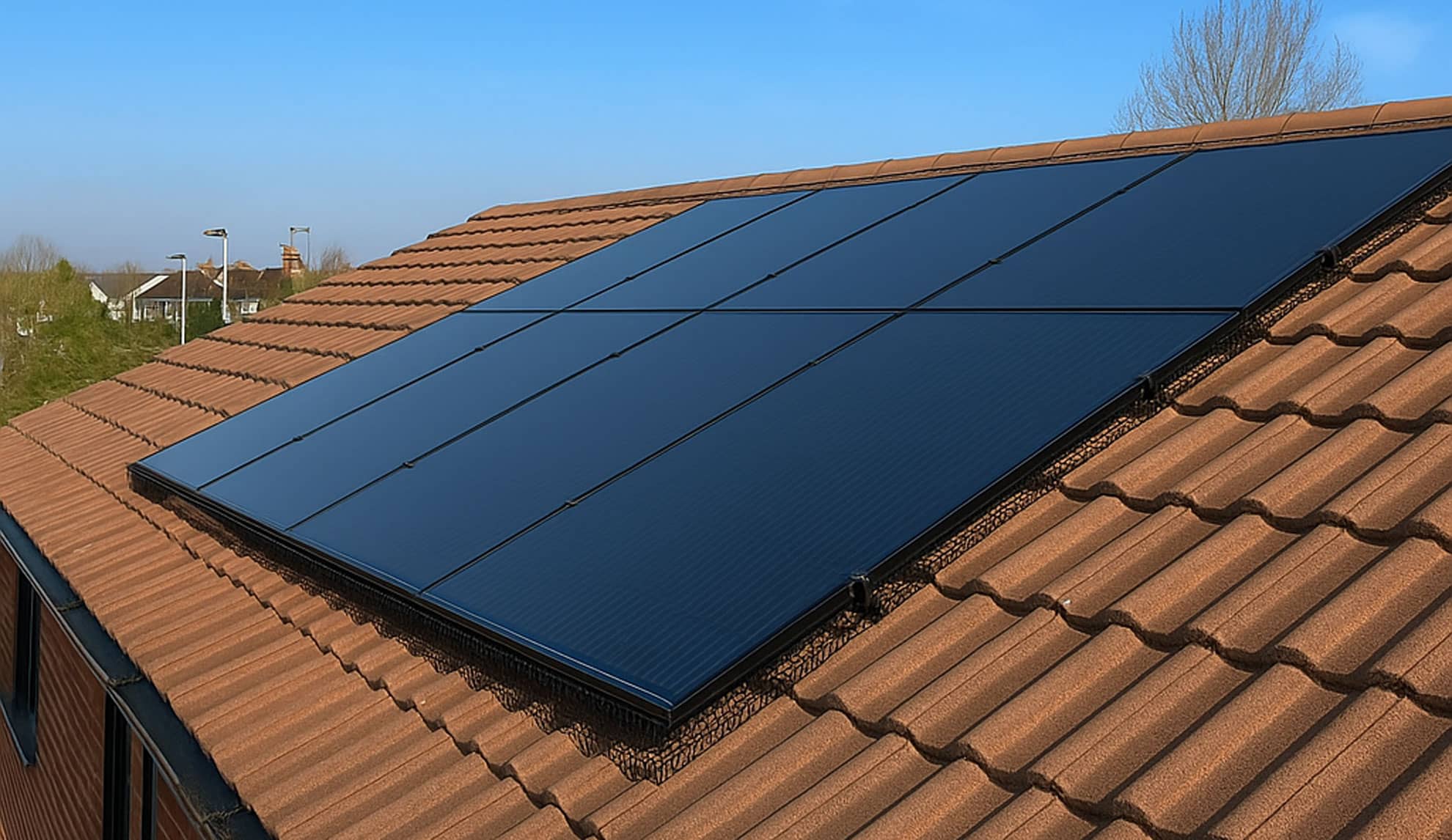
Solar photovoltaic panels work by converting the sun’s natural solar light into electrical energy via voltage. Through the use of solar PV, you can essentially create the electricity needed to power your home. Relevant considerations affecting whether or not solar panels are suitable for your own Victorian property include whether there is any requirement for planning permission in your area, whether your property is a listed building, whether you have enough roof area facing adequately towards the Sun, and whether the structure of your roof itself is in a suitable condition to support the weight of solar panels.
Solar thermal systems
Solar thermal systems use a different type of roof-mounted panel called a collector, which directly absorbs heat from the Sun and then transfers it to a hot water cylinder to provide you with domestic hot water. Because the technology for this type of solar panel is quite different, you may need to think carefully at the planning stage as to the best use of your limited roof area, if you plan to combine Solar PV panels with solar thermal collectors.
For more information about all these renewable-energy-based systems, please read our follow-up resource, Renewable Energy Solutions for a Victorian House.