

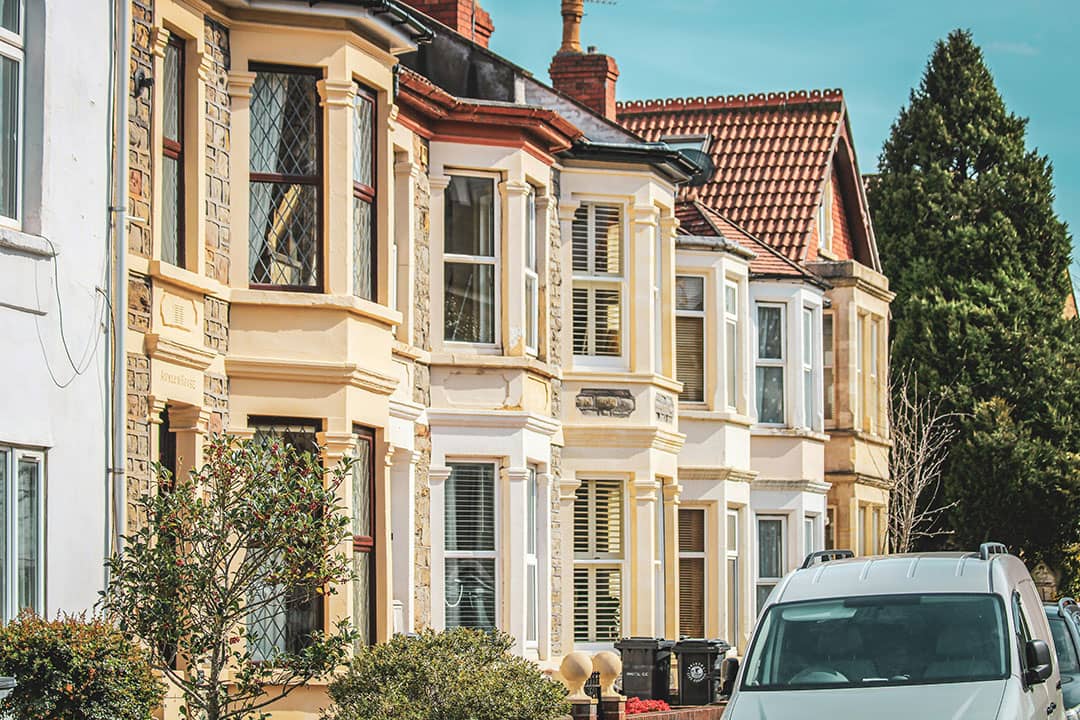
Victorian houses are typically not very energy-efficient. They tend to have high ceilings, wooden floorboards, large windows, pitched rooves and little-to-no insulation installed at the time of original construction. The energy efficiency of homes was not uppermost in the minds of the Victorians facing a housing shortage caused by a sharp rise in the population. For reference, between 1851 and 1911 the population of England and Wales doubled from 18 million to a staggering 36 million. The main focus of Victorian and Edwardian housing planners was to affordably deliver homes to accommodate these rapidly growing numbers.
When we fast-forward 124 years from the death of Queen Victoria in January 1901, we find that the focus in housing policy has shifted. Not only has the cost of domestic central heating with fossil fuels increased to record levels in the early 2020s, but also climate change and its impact are now among society’s biggest concerns. How this issue is tackled across the globe will determine the extent to which we can limit these effects. There are national and supranational guidelines in place setting out related aims, such as a goal for the EU to become carbon-neutral by 2050 set out in the European Green Deal, to which the UK has also subscribed, and while many countries have developed policies to encourage the uptake of more renewable energy. However, guidelines are only as good as the extent to which they are followed, and it will be individual actions that ultimately make the difference as to whether or not national targets are achievable.
If you are a home-owner, then your home is a space under your control and you therefore have the ability to take steps to make it more energy-efficient in order to reduce your overall carbon footprint. The potential for energy-efficiency improvements will be greatest if you reside in a property built before 1920, as most such houses lack cavity walls, although these began to appear as a design feature on some Edwardian houses in the early 1900s.
Improving the heat retention rates of your property with steps such as draught-proofing and insulation is recommended as your first set of measures (you can read more on how to improve the energy efficiency of your Victorian home here).
Next steps you can take once a good standard of insulation has been achieved include upgrading the heating systems and solutions in your Victorian home to renewable energy-based ones. Below, we outline the heating solutions available that are suitable for Victorian properties.
Air-to-water heat pumps
An air-to-water heat pump is an electrically-powered heat transfer system that would replace your regular gas boiler and so upgrade your central heating and hot water-heating systems. The fact that it uses electricity to run on as opposed to burning natural gas (as a typical boiler would do) means that it can be as environmentally friendly as your electricity supply is. As of 2023, 51% of electricity used in the UK came from zero-carbon power sources; and this figure is only set to rise, making electrically powered heating via heat pump technology an increasingly renewable solution. Air-to-water heat pumps do require space for the installation of both an outdoor unit and an indoor one, so something to consider would be how and where to accommodate these fixtures. Space can sometimes be limited in a Victorian property, and if it is terraced or narrowly separated from neighbouring houses, the external unit is likely to need to be placed at the back of your house, where it will have a cosmetic impact as well as taking up space. In most cases, the indoor unit could be fitted in the space occupied by your existing boiler however.
The system works by drawing heat energy from the outside air and transferring it to your heating system. In the outdoor unit, a liquid refrigerant is used, and this turns to a gas state when absorbing heat energy. Within the indoor unit, the gas that holds the energy is compressed in order to raise its temperature, at which point the heat from the gas transfers into your heating system, cooling the gas so that it returns to a liquid state and can be cycled back to the outdoor unit again for reuse.
The viability of installing a heat pump in your home will be partly determined by the rate of heat loss from your house, which in a large Victorian property may be fairly high. It is worth exhausting every possible means of reducing the rate of heat loss from your home before exploring a heat pump as an option. Once your home has been insulated as much as can be managed, a trusted installer can then advise and help carry out calculations to determine an exact heat loss figure. This will inform the size of heat pump your property will require. It is highly important that the correct size of heat pump is installed in your property. A unit that is too big for your property can reach a required temperature quicker, leading it to cycle on and off more, a process known as short cycling. This can waste energy and puts more pressure on the unit, shortening its lifespan. A unit that is too small may run constantly in the attempt to reach the required temperature, without ever reaching it, especially during colder winter temperatures. This leads to a higher amount of electricity used and general inefficiency, as the homeowner may find that rooms in the house are not warm enough in winter and could therefore resort to costly supplementary heating methods, such as electric heaters, to make up the shortfall in temperature in order for the inhabitants of the house to be comfortable.
In some cases, the initial installation cost of a heat pump can be more expensive when compared to that of a typical gas boiler, depending on the property size. To help with the cost, the government are offering a £7,500 grant as part of their Boiler Upgrade Scheme (BUS), a support to those looking to decarbonise the way they heat their homes. For the average three-bedroom home requiring a full heating system, more often, with the BUS Grant included, the cost for a heat pump system is actually the same as that of a gas boiler, if not slightly cheaper. The scheme is available as an upfront grant towards the installation of heat pumps and also biomass boilers. The scheme works in that your installer will apply for the grant on your behalf on your request. Once the grant has been awarded to the installer, the amount will be discounted from your bill, leaving you to pay the remaining balance.
Heat pumps can be a viable option for Victorian homes, but insulation measures do usually need to be taken in advance to ensure their suitability.
Solar panels – Solar PV (photovoltaic) or solar-thermal systems
Solar panels have the potential to allow you to generate the electricity needed to power your home through energy transferred from the sun’s natural light. The Solar PV system uses a number of modules placed in positions that face towards the Sun, usually on the rooftop of a house or outbuilding, although some property owners with large gardens or extended land may choose to place them elsewhere in their grounds. Sunlight hitting the modules initiates a flow of electrons from a positive to negative semiconductor material, creating an electrical current.
Considerations as to whether solar panels would be suitable for your home include your roof area, in terms of the available space for modules to be placed. Victorian properties generally have chimney stacks and often have other features such as gable roofs that may eat into the area needed for the required amount of panel space. This could also be the case if a property has had a loft conversion, leading to the addition of Velux or dormer windows.
The direction in which the roofs of your property face will also need to be considered. South-facing roofs can be best for maximising the potential sunlight your modules would be exposed to. Whilst roofs facing in other directions can also generate power from the sun’s light, it will be less efficient.
If you are considering a Solar PV system, it is worth calculating the potential power generated from that system and how this compares with the level of power used in your property to ensure that it will be adequate. You should then factor in the cost of installation. With older properties, the condition of the roof itself and whether or not its structure can safely support the weight of the panels and associated equipment will be an important factor to consider.
Whether or not a Victorian property is a listed building may also affect the viability of installing solar panels. Generally, listed properties are subject to strict rules about making any changes to their exteriors, which would include changes to the appearance of their roofs such as would be brought about by the addition of solar panels. Even unlisted buildings may be subject to strict planning restrictions if they happen to be situated in designated conservation areas. Check whether planning permission is required for adding solar panels to your property before making any additional arrangements. Although planning rules affecting listed buildings and those in conservation areas may have to be updated in the future to allow for increased access to renewable energy, no such changes can be presumed in advance of their implementation, and it is a legal requirement to work within the presently abiding regulations for as long as they are in force.
Solar Thermal Energy
Solar thermal energy technology is similar to that of Solar PV in that is uses a number of panels (though in this case they are officially called ‘collectors’) that attach to the roof of a property. However, the modus operandi of solar thermal differs in that these collectors then directly absorb the sun’s heat in order to provide hot water for the property via a hot water cylinder and cylinder coil.
This solution could reduce your energy bills as you are no longer having to purchase energy to heat your water, increasing the energy efficiency of your home and therefore reducing the amount of carbon dioxide production the heating of your home requires.
The appropriate specification of a Solar Thermal system will require calculations to estimate the amount of hot water needed on a daily basis. This can be worked out by looking at factors such as the number of occupants in your home and the number of baths and showers taken. And if your house is not currently at is full potential occupancy level, for example if you live alone or with a partner but are planning to have children in the future, or if when you eventually move out, a larger family would be likely to take over the use of the home, then it may well be worth factoring in the future hot water requirements of your home when it has more residents too.
As with solar PV panels, a certain amount of roof space will be needed for solar thermal heating to be a viable solution. Generally, for a property to be occupied by an average family of four, we would suggest making available a space of 4m² for the placement of solar thermal collectors. Assessing whether an adequate amount of space is available on the roof of your Victorian property will be critical in advance of installing a solar thermal energy system, in order to ensure that this system will have a positive impact on your energy efficiency. As the collectors will be an addition to an external part of your property, you should also investigate whether or not advance planning permission is needed under applicable rules.
Underfloor Heating
There are two main types of underfloor heating available, water-based and electric. Both types work in a similar way, using a network of pipes or cables laid beneath your floor.
Water-based underfloor heating works by circulating warm but not boiling hot water throughout a pipe network that sits beneath your floor. In the case of a water pipe-based system, the pipes warm up when the heating system is activated, leading the heat to radiate through the floor, which gradually warms up the room in question.
Electric underfloor heating instead uses heat mats that are laid beneath the floor. These mats are powered by a series of cables that are fixed onto them. Electric underfloor heating is generally easier and less costly to fit than water-based underfloor heating. However, the long-term running costs of electric underfloor heating tend to work out higher because of the higher cost of heating by electricity compared with other forms of power. Because of these higher running costs, the use of electric underfloor heating is typically restricted to smaller rooms, for example bathrooms.
The nature of using water at a lower temperature to heat pipes in the water-based system makes heats pumps a viable companion to this type of solution. The lower temperature also makes for higher levels of operational efficiency. As well as offering increased energy efficiency, underfloor heating can remove the need for radiators, freeing up wall space and reducing levels of dust in the home.
Because installing underfloor heating of any kind requires the complete lifting of the existing flooring, it is a major job that typically requires all existing room contents to be removed first. It may be impractical if you are happy with your existing fitted kitchen or bathroom, or if the rest of your house is full of heavy furniture and you don’t want the trouble of moving it all into storage. However, it would be possible to install underfloor heating when you are renovating an entire property that has to be emptied in any case for that purpose, or for example when you are replacing your existing flooring or adding a new extension to your Victorian home.
Solar Diverters
A solar diverter can help you get the maximum efficiency possible from a solar PV system installed on the roof of your Victorian property by essentially diverting any energy produced by your solar panels that is not immediately needed for powering your home. This excess of energy can be diverted to either a heat source or a battery storage solution for use at a later time. In either context, the use of a solar diverter is a potentially useful alternative to exporting excess solar power directly to the National Grid, which for those who wish to do this can be a useful source of income to help offset your initial installation costs over time, provided that you have signed up to a scheme that pays you feed-in tariffs.
Of the two options for the use of a solar diverter as listed above, storing this excess energy in a hot water cylinder via an immersion heater might be the more attractive one for those who have space for a hot water cylinder in their homes, because battery storage options for electricity can be very costly.
Using the excess solar energy to heat the water for your property can reduce or remove your dependency on traditional heating methods such as a gas boiler. The use of a solar diverter in combination with an immersion heater can therefore not only save you money on the cost of gas-powered water heating, reducing your overall energy bills in the process, but also improve the carbon footprint of your home by cutting your reliance on piped natural gas as a fuel.
A solar diverter is relatively easy to fit within your home. It is simply a small box that it fitted within your electric supply circuit. Usually, it will be fitted close to your hot water cylinder, between the mains electrical supply and the power supply of the immersion element. Two Current Transformer clamps are then used, one of which needs to be fitted to your mains incoming supply, while the other must be fitted to your solar PV AC cable.
Typically, the installation of a solar diverter tends to cost between £300 and £500, as you will need a qualified electrician to fit the electrical device. In some circumstances, for example if your property has a combi boiler without a hot water cylinder, a solar diverter cannot be used to power an immersion heater, but could still be useful for powering battery storage.
Conclusion
With today’s proliferation of renewable technology provision for domestic properties at increasingly affordable prices, there is no shortage of options for converting your home to renewable energy-based heating and electrical power. Which of these make the most sense for you will depend significantly on the characteristics of your home, your heating and electricity consumption needs, and your total budget.
At Gregor, we are always happy to advise and to quote you on the cost of installing appropriate renewable energy solutions. For a chat with one of our advisors and to arrange a free, no-obligation quotation, call one of our team today on 0117 935 2400 (Bristol) or 01225 738 397 (Bath).